Looking Beyond the Findings: The Role of Clinical Reasoning in Whole-Person Dental Hygiene Care
Jul 23, 2026Two patients present with generalized gingival inflammation, moderate plaque accumulation, and bleeding on probing. At first glance, they appear to have the same disease. However, the underlying causes—and the care each patient requires—are entirely different. Recognizing those differences begins with clinical reasoning.
Clinical findings tell us what is happening. Clinical reasoning helps us understand why.
In dental hygiene, clinical reasoning is the cognitive process of integrating clinical findings with medical history, medications, behavioral factors, and social determinants of health to determine the underlying causes of disease and develop individualized, evidence-based care [1].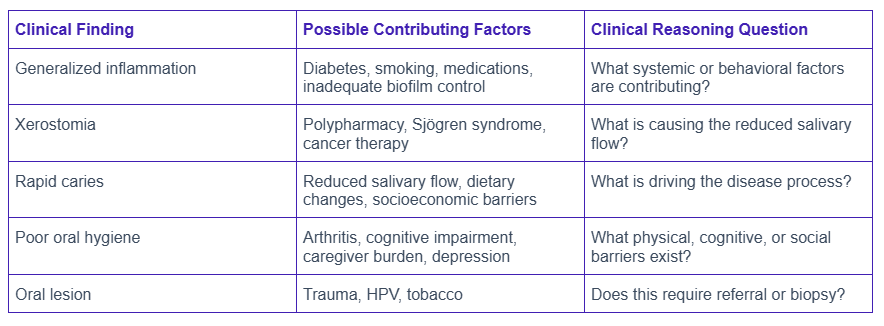
This approach immediately encourages dental hygienists to think beyond appearances and consider the root causes of oral health issues. Likewise, a persistent oral lesion may initially appear to be a traumatic ulcer. Clinical reasoning prompts the dental hygienist to evaluate duration, risk factors, medical history, tobacco and alcohol use, HPV exposure, and referral needs rather than simply documenting the finding.
Looking Beyond the Mouth
Oral findings rarely exist in isolation; they often reflect interactions between biological, behavioral, environmental, and systemic factors.
To truly understand the “why,” dental hygienists must explore the broader context of a patient’s health. The recently updated 2025 American Dental Hygienists’ Association (ADHA) Standards for Clinical Dental Hygiene Practice emphasize the integration of systemic health, risk assessment, and social determinants of health into clinical practice [2].
This philosophy of looking beyond isolated clinical findings reflects the educational approach of the National Network of Healthcare Hygienists (NNHH), which prepares dental hygienists to think beyond procedures and recognize their role as healthcare providers within collaborative care teams.
Key areas to consider include:
- Medical History: Chronic diseases, medication reviews, cancer therapies, pregnancy, and sleep disorders all have profound impacts on oral health. For instance, a patient undergoing cancer therapy may experience severe xerostomia and oral mucositis, requiring a tailored approach to oral care.
- Behavioral Factors: Health literacy, nutrition, tobacco use, stress, and patient readiness play significant roles in oral health outcomes. A patient with high stress levels and poor nutrition may be at a higher risk for periodontal disease, regardless of their home care routine.
- Social Determinants of Health (SDOH): SDOH are the conditions in the environments where people are born, live, learn, work, play, worship, and age that affect a wide range of health, functioning, and quality-of-life outcomes and risks [3]. Factors such as transportation, financial barriers, insurance status, housing instability, food insecurity, employment, and caregiver responsibilities can create significant obstacles to achieving optimal oral health.
Understanding these factors allows the dental hygienist to practice whole-person care.
Clinical Reasoning Leads to Better Clinical Decision-Making
Understanding the underlying factors changes clinical decisions in profound ways. It shifts the focus from simply treating disease to managing health. Clinical reasoning allows dental hygienists to:
- Select appropriate oral hygiene aids that align with the patient’s physical and cognitive abilities.
- Adapt recommendations to the patient’s reality, recognizing that a “gold standard” approach may not be feasible for everyone.
- Prioritize achievable goals that build patient confidence and compliance.
- Communicate effectively with physicians and other healthcare providers to coordinate care.
- Refer appropriately when issues fall outside the dental hygiene scope of practice.
- Reinforce prevention strategies that address the root causes of disease.
The emphasis is that clinical reasoning improves care—not simply because it identifies disease, but because it supports individualized, realistic treatment plans. As noted in the literature, the dental hygienist has the opportunity to lead closer integration of oral and primary care as an oral healthcare manager, by coordinating the team of providers needed to implement comprehensive, patient-centered care [4].
The Evolving Role of the Dental Hygienist
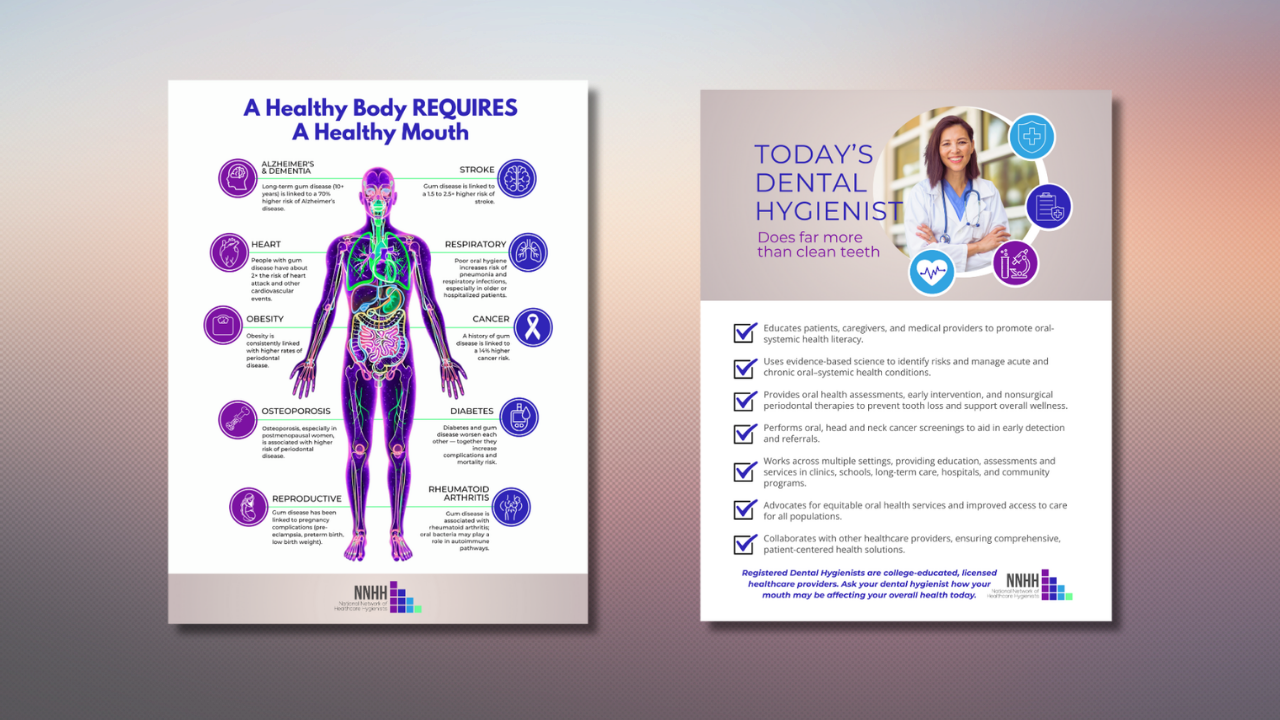
The National Academies of Sciences, Engineering, and Medicine (NASEM) recently highlighted the importance of advancing oral health across the lifespan and integrating oral health into primary care [5]. Dental hygienists contribute as healthcare professionals by assessing oral-systemic relationships, identifying risk factors, supporting chronic disease management, promoting health literacy, and participating in interprofessional collaboration. The Interprofessional Education Collaborative (IPEC) Core Competencies provide a framework for effective interprofessional collaborative practice, emphasizing shared values, roles, communication, and teamwork [6]. The World Health Organization (WHO) also advocates for the integration of oral health into primary care, recognizing its critical role in overall health [7].
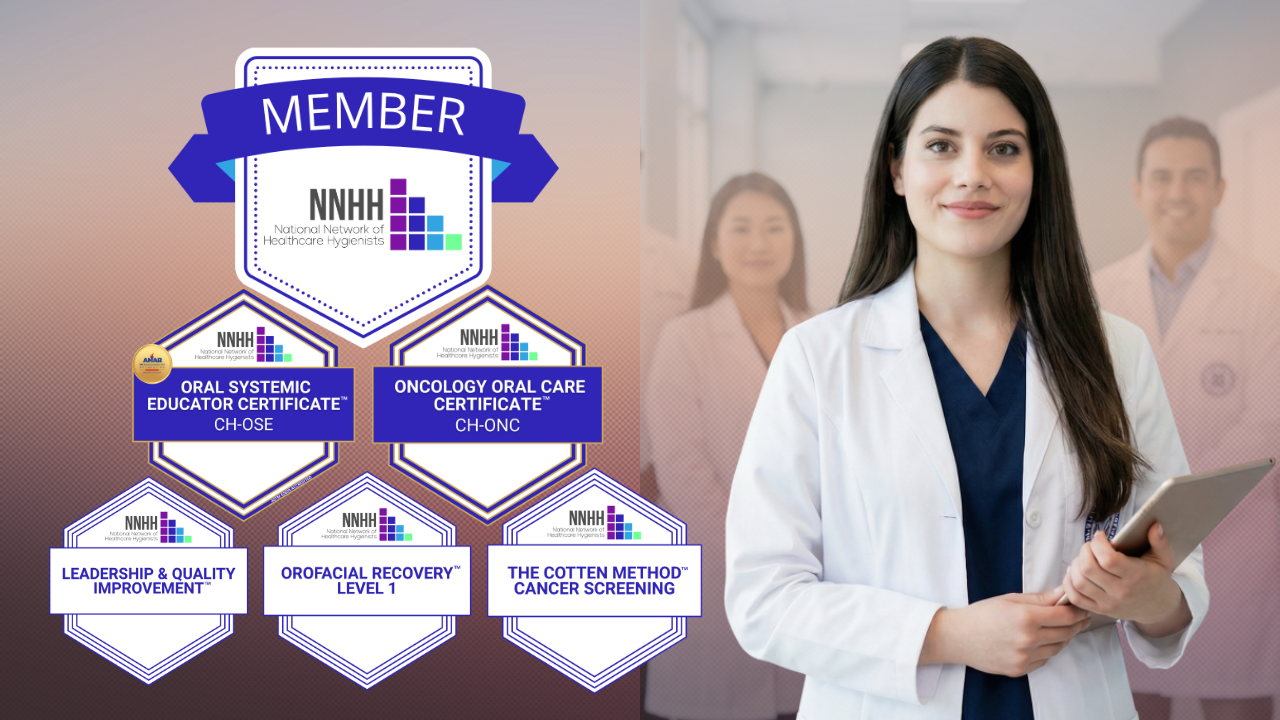
As dental hygienists expand their roles within collaborative healthcare teams, advanced education becomes increasingly important. The National Network of Healthcare Hygienists (NNHH) offers certificate programs that build upon these clinical reasoning skills through evidence-based continuing education:
- The Oral Systemic Educator Certificate™ serves as a foundational credential, expanding understanding of the complex relationships between oral inflammation and chronic disease.
- The Cotton Method™ Certificate strengthens comprehensive head and neck assessment and oral cancer screening skills, helping clinicians recognize subtle abnormalities and understand when referral is warranted.
- The Oncology Oral Care Certificate™ provides an in-depth understanding of the oral implications of cancer therapies, allowing hygienists to better support patients before, during, and after treatment.
- The Orofacial Recovery Certificate™ - Level 1 explores the anatomy and physiology of the head, face, and neck, focusing on temporomandibular joint (TMJ) function and rehabilitation.
- The Leadership & Quality Improvement Program™ further empower hygienists to take on specialized roles in collaborative care and healthcare administration.
- The Airway & Sleep Medicine Certificate™ equips dental hygienists to recognize clinical indicators of airway strain and sleep-disordered breathing, enabling them to identify root causes of systemic health issues and facilitate interprofessional referrals and collaboration within a whole-person care model.
Clinical reasoning cannot replace evidence-based practice; rather, it strengthens it by ensuring that scientific evidence is applied within the unique context of each patient’s health, values, and circumstances.
Every clinical finding tells a story, but only thoughtful clinical reasoning reveals the whole story. As healthcare continues to move toward prevention, chronic disease management, and collaborative care, dental hygienists are uniquely positioned to bridge oral and systemic health by understanding the person behind the diagnosis.
Looking beyond the clinical findings is not about doing more—it is about thinking differently.
If interprofessional education and collaborative care interest you, but you aren't sure where to start, check out this new short training based on the IPEC Core Competencies, through the lens of the RDH HERE
Author

Nannette Kelly, RDH, CH-OSE, CH-ONC, FADHA
Nannette has over 35 years of experience in dental hygiene, she is passionate about patient-centered care and promoting oral-systemic health connections. Nannette is committed to continuously enhancing her skills and staying up to date with the latest advancements in dental hygiene, she holds certificates in Oncology and Oral Systemic Education. Actively engaged in ongoing education and professional development, Nannette collaborates with peers as a member of the NNHH and ADHA. She strives to elevate the dental hygiene profession, advocate for oral health awareness by organizing oral cancer screening events, and shares essential oral health care tips with individuals managing diabetes in her community.
References
-
Williams, N. P., Glasnapp, D. R., Tilliss, T. S., & Osborn, J. (2003). Predictive validity of critical thinking skills for initial clinical dental hygiene performance. Journal of Dental Education, 67(11), 1186-1198.
-
American Dental Hygienists’ Association. (2025). Standards for Clinical Dental Hygiene Practice. https://www.adha.org/wp-content/uploads/2025/03/2025_Standards-of-Dental-Hygiene-Practice.pdf
-
U.S. Department of Health and Human Services. (n.d.). Social Determinants of Health. Healthy People 2030. https://health.gov/healthypeople/priority-areas/social-determinants-health
-
Theile, C. W., Strauss, S., Northridge, M. E., & Birenz, S. (2016). The oral healthcare manager in a patient-centered health facility. Journal of Evidence-Based Dental Practice, 16(Suppl), 34–42. https://pmc.ncbi.nlm.nih.gov/articles/PMC4888908/
-
National Academies of Sciences, Engineering, and Medicine. (2021). Advancing Oral Health Across the Lifespan. Washington, DC: National Academies Press. https://www.nationalacademies.org/read/29096
-
Interprofessional Education Collaborative. (2023). Core Competencies for Interprofessional Collaborative Practice: Version 3. https://www.ipecollaborative.org/ipec-core-competencies
-
World Health Organization. (2023). Global Oral Health Action Plan 2023–2030. https://www.who.int/publications/i/item/9789240090538