IPE Competency for RDHs: A Foundation for Confident Collaboration
Nov 06, 2026Oral-health integration is happening, bringing dental hygienists and medical providers into closer collaboration. Whether through shared teams or coordinated referrals, that work calls for more than clinical expertise.
How do you explain your contribution, communicate an oral-health concern, or develop a plan with another provider? These are skills hygienists can start building now.
The IPEC competencies offer a practical foundation. They give healthcare professionals shared expectations for working together—and give hygienists a useful place to begin.
What is IPEC?
The Interprofessional Education Collaborative (IPEC) developed a shared framework for working together across healthcare professions and updated its core competencies for interprofessional collaborative practice in 2023.
The framework is for learners and practicing healthcare professionals—not just one discipline. It gives RDHs and medical providers common expectations for respect, role clarity, communication, and teamwork.
For dental hygienists, learning this framework is preparation for everyday collaboration—not only a future career change.
A shared framework—not another profession's identity
Historically, competency frameworks have often been developed within individual healthcare professions. IPEC was created to establish shared competencies for collaboration across professions while preserving each provider’s role and scope of practice. IPEC complements those standards rather than replacing them. Your profession's standards guide the work you are qualified to do; IPEC describes how you work with other professionals. It does not expand anyone's scope.
The 4 domains: What collaboration looks like in practice
A competency combines the knowledge, skills, and abilities (KSAs) needed for effective practice. A domain groups related competencies into a broad area, such as Communication. A subcompetency is a more specific expectation within that area. The 2023 IPEC framework organizes 33 subcompetencies into four areas, called domains, under Interprofessional Collaboration.[1]
Values and Ethics: 11 subcompetencies
This domain focuses on shared values, ethical conduct, and mutual respect. Its subcompetencies include protecting patient privacy and choices, valuing other professionals' expertise, and practicing empathy and compassion.
For an RDH, this can mean adapting an oral-care plan to a patient's needs and respecting colleagues' input. Collaboration begins with people, not professional territory.
Roles and Responsibilities: 5 subcompetencies
This domain asks you to understand your contribution and how it connects with others. Its subcompetencies include combining different areas of expertise and clarifying each person's role, scope, and responsibilities.
In diabetes care, you contribute oral-health assessment and preventive expertise while medical and nutrition professionals contribute their own knowledge. You do not need every answer; you need to know when to involve someone else.
Communication: 7 subcompetencies
This domain makes clear, respectful communication a practical skill. Its subcompetencies include explaining your role, using communication tools, avoiding unnecessary jargon, and listening actively.
The goal is not to sound more technical. It is to help another provider understand your findings and the next step.
Teams and Teamwork: 10 subcompetencies
This domain focuses on coordinated care and shared problem-solving. Its subcompetencies include sharing leadership and accountability and recognizing how workplace resources and processes affect the team.
Improving oral care means considering staff time, supplies, training, and follow-up—not just recommending a technique.
3 Ways to Begin Collaborating Today
With 4 domains and 33 subcompetencies, there area many ways to use and interpret the published framework. Below are three examples from the 33. Adapt these scripts to your responsibilities and setting. They show how the framework translates into everyday conversations.
1. Explain your contribution and ask a question
“I'm a registered dental hygienist and oral-systemic educator. I assess oral health, identify oral-health risks, and educate providers and patients on oral-systemic health. What oral-health concerns are you seeing with your patients?”
This puts two communication subcompetencies into practice: explain your role in a way that matters to them, then listen. A useful question can open a conversation without requiring a formal presentation.
2. Organize a concern using SBAR
SBAR means Situation, Background, Assessment, Recommendation. For a hypothetical patient diagnosed with periodontal disease today and scheduled to begin treatment in three weeks, a message to primary care might sound like this:
- Situation: “Our mutual patient was in my chair today, and he has given permission for us to discuss his care.”
- Background: “He was diagnosed with active periodontitis today, and nonsurgical periodontal treatment is scheduled in three weeks. Periodontitis is associated with increased cardiovascular risk.”
- Assessment: “I took his blood pressure twice: 168/104 mmHg initially and 166/101 mmHg after five minutes of quiet, seated rest. He reports no acute symptoms.”
- Recommendation: “Can your office see him for blood-pressure screening and evaluation as soon as possible? We would like his blood pressure assessed and managed before his appointment so elevated readings do not delay his treatment.”
This is proactive collaboration: using today’s findings to coordinate medical follow-up and help keep necessary periodontal care on schedule. Use actual findings and follow your practice’s protocols for referral and urgent concerns.
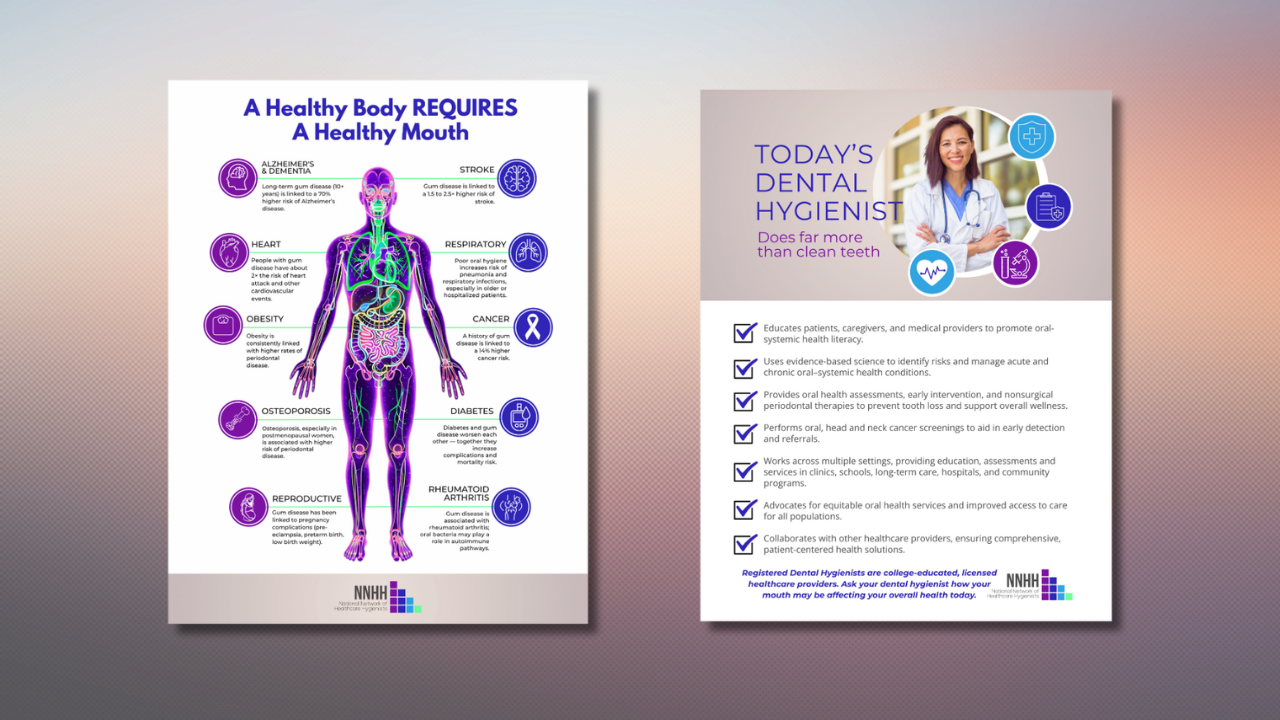
Since it is unlikely that you will get a provider on the phone in the middle of a busy work day, call the office and ask for their email address. Send the above content along with a journal article or infographic, like this perio/cardiovascular one from the Americal Heart Association, or this oral-systemic health one we offer free.
3. Invite shared problem-solving
After completing the Airway & Sleep Medicine Certificate Program™, an RDH screens an adult receiving active myofunctional therapy (for tongue thrust) during orthodontics. With permission, the RDH emails the therapist and orthodontist:
“Our mutual patient scored 6/8 on the validated STOP-Bang questionnaire, indicating high risk for obstructive sleep apnea. I recommend medical sleep evaluation. What have you each observed? Can we agree on a referral plan?”
Clarify follow-up:
“Who will coordinate the referral and follow-up?”
This demonstrates shared decision-making and role clarity, instead of expecting the patient to be their own care coordinator. Medical providers determine diagnosis and sleep testing.
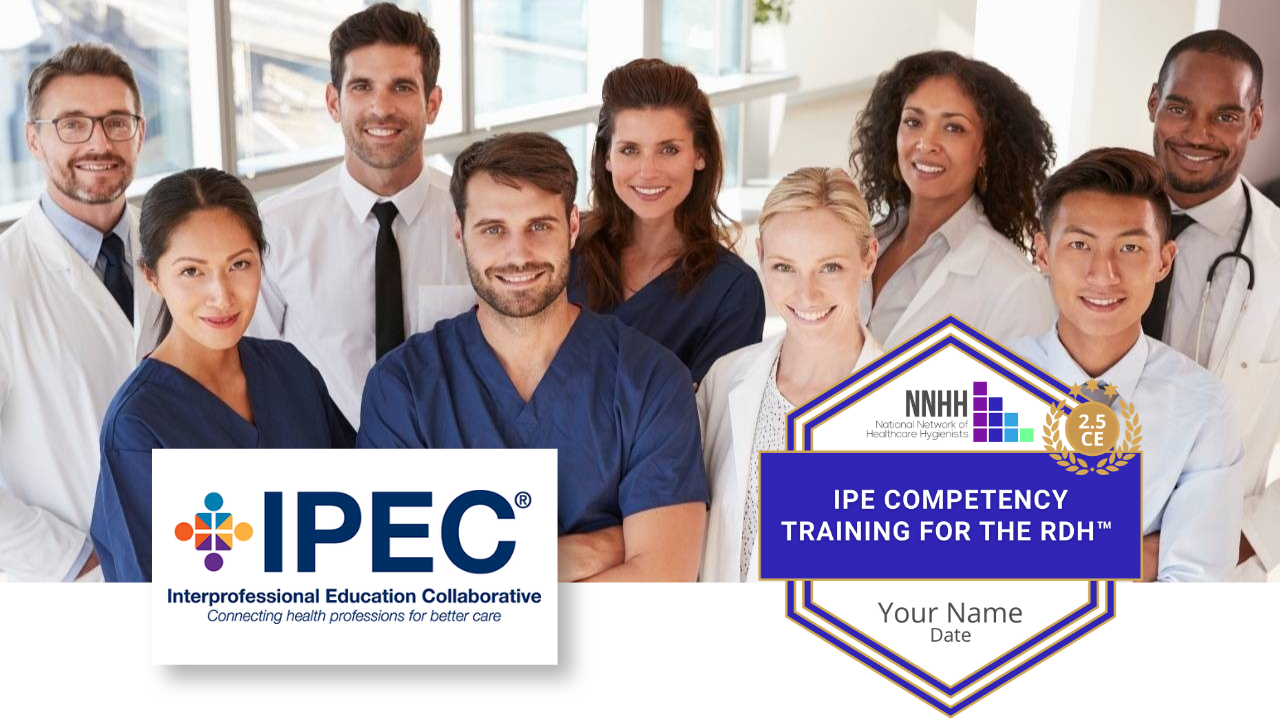
Build your foundation with the IPE Training for RDHs
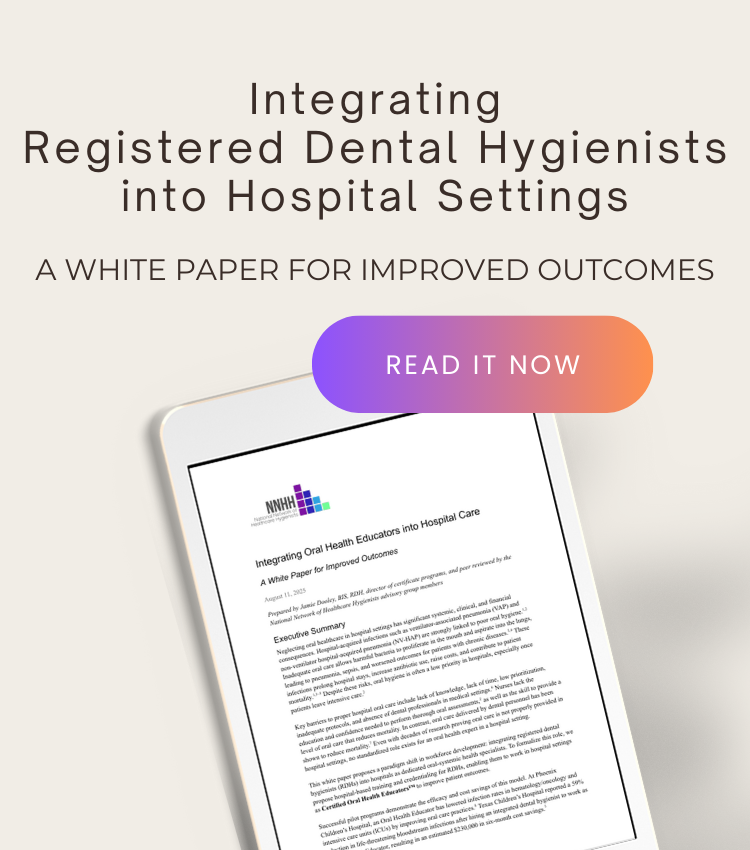
All 33 subcompetencies deserve more context than one article can provide. That is why we at the National Network of Healthcare Hygienists (NNHH) created a short, focused course designed to be affordable and accessible to all RDHs.
Our Interprofessional Education Competency Training for the RDH™ explores every domain and subcompetency through RDH-specific case examples, evidence-based content, and reflective journaling. I also guide you to develop a professional development plan based on journal prompts. Whether you are a dental hygiene student or an experienced clinician, the course provides a foundation for putting collaborative skills into practice.
We consider this foundation essential to oral-health integration and advancing the dental hygiene profession. That is why the training is a prerequisite for all advanced certificate programs and educational credentials NNHH offers. Complete it once to fulfill the requirement for current and future NNHH credentials.
Ready to build your foundation and learn all 33 subcompetencies?
Use code IPECARTICLE to save 50% for a limited time
References
[1] IPEC Core Competencies for Interprofessional Collaborative Practice: Version 3, 2023
AUTHOR
Jamie Dooley is a dental hygiene workforce development expert and Program Director of the National Network of Healthcare Hygienists (NNHH). Her work connects professional credentialing, education, and healthcare integration, advancing recognition of RDHs as oral-systemic experts and essential members of collaborative healthcare teams. Jamie’s dental public health experience and two decades of in-depth individual and group coaching give her keen insight into the barriers hygienists face—and the preparation and support they need to move beyond them. She brings that insight to NNHH’s programs and member guidance, helping RDHs expand their professional identity and contribute their full expertise to interprofessional, person-centered care. Connect with her at [email protected].