ADHA White Paper Calls for Dental Hygiene Self-Governance
Sep 29, 2026New white paper outlines a public-interest framework for aligning dental hygiene authority, accountability, and access to preventive oral health services.
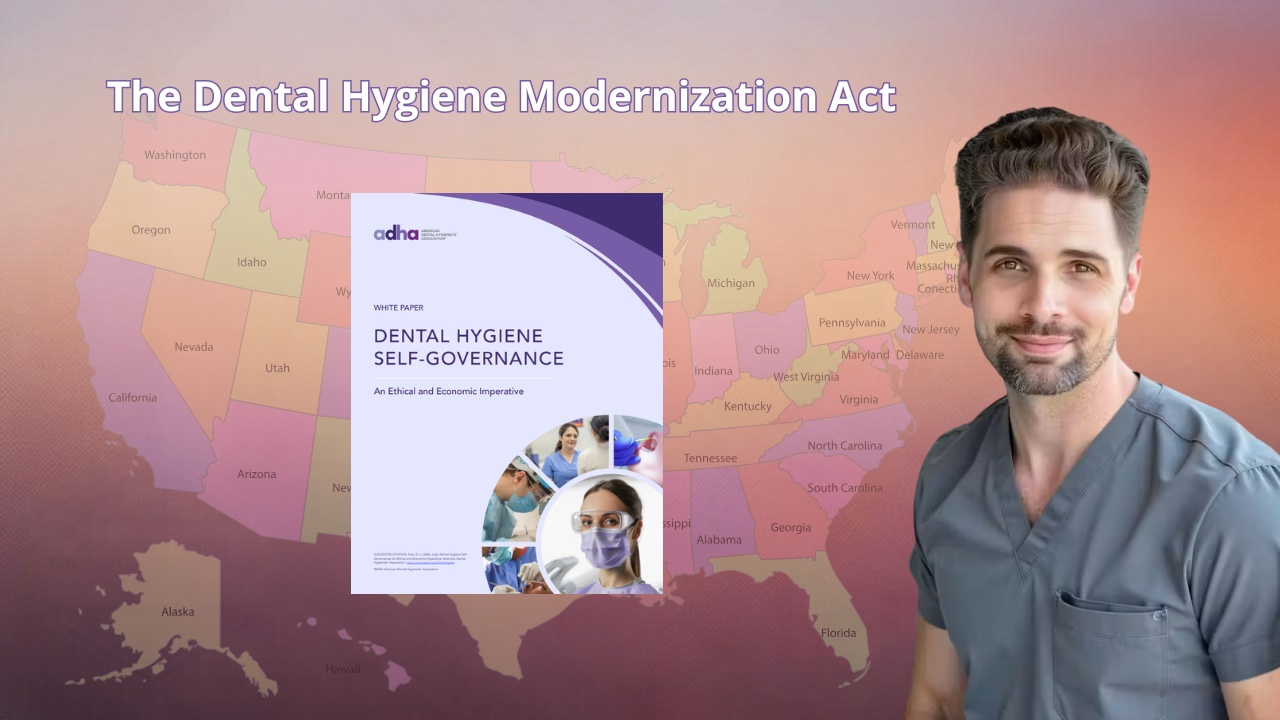
The American Dental Hygienists’ Association (ADHA) has released a new white paper, Dental Hygiene Self-Governance: An Ethical and Economic Imperative, examining how governance structures can better support preventive oral health care. The National Network of Healthcare Hygienists (NNHH) supports the white paper’s call for a modernized dental hygiene governance framework—one that aligns professional authority with education, clinical competence, accountability, and the public’s need for accessible preventive oral health care across all care settings.
Authored by Derik J. Sven, DHSc, MBA, MPH, RDH, CDT, FADHA, FAADH, the paper distinguishes self-governance from self-regulation and makes the case that the difference matters for patients, communities, and the future of the dental hygiene profession.
The paper explains that self-regulation generally involves authority delegated by the state to oversee professional conduct within an existing system. Self-governance, by contrast, addresses who has the authority to help define a profession’s scope of practice, standards, educational expectations, and the systems through which care is delivered.
For dental hygiene, the paper argues that this distinction is especially important as the oral health system increasingly emphasizes prevention, early intervention, minimally invasive care, and population health.
Centering preventive care and the public interest
Dental hygienists are educated and licensed to provide essential preventive oral health services. Yet the white paper notes that regulatory, reimbursement, and practice-setting structures can limit how fully dental hygienists are able to use their education and clinical competencies—particularly in communities with limited access to oral health care.
The paper frames governance reform as a public-interest issue, not simply a professional one. Its central premise is that policies should align authority with education, demonstrated competence, licensure, and accountability while preserving the collaboration that patients and communities need across the oral health care team.
According to the paper, a modernized framework could help support more flexible preventive-care delivery in settings such as schools, long-term care facilities, community health settings, hospitals, and other underserved locations.
A measured framework for modernization
The white paper does not propose unrestricted autonomy. Instead, it presents the Dental Hygiene Modernization Act framework as an approach that connects expanded authority with clear safeguards, including licensure, education, clinical experience, continuing competence, independent oversight, and public accountability.
The paper identifies several areas for policymakers, regulators, and professional organizations to consider:
- Independent dental hygiene regulatory bodies with appropriate public representation;
- Separate dental and dental hygiene practice acts that recognize the professions’ distinct scopes and responsibilities;
- Scope-of-practice policies aligned with education and clinical competence;
- Direct reimbursement pathways for dental hygienists in Medicaid and commercial payer systems;
- Fewer unnecessary practice-setting restrictions that can limit where preventive services are delivered;
- Collaborative practice models that replace outdated dependency-based supervision requirements; and
- Regular public-interest review of regulatory policies in light of evidence, workforce needs, and oral health priorities.
Why the conversation matters now
As Derik J. Sven has noted in previous podcast interviews and publications, dental hygiene scope-of-practice requirements can vary significantly from state to state—even for providers with the exact same education, licensure, and clinical competence—creating inconsistent access to preventive oral health services.
The paper situates dental hygiene self-governance within a broader conversation about health workforce utilization, access, affordability, and regulatory accountability. It also looks to the evolution of other health professions, including nursing, to illustrate how education, scope, standards, and accountability can be aligned over time to better serve the public. This approach aligns with NNHH’s commitment to advancing healthcare-based dental hygiene across all care settings.
For ADHA, the conversation is ultimately about helping ensure that preventive oral health care is available where and when people need it. A governance model that recognizes dental hygienists’ expertise and holds the profession to transparent, evidence-based standards can support access while strengthening public protection.
— Dental Hygiene Self-Governance: An Ethical and Economic Imperative
Read the full white paper
ADHA invites dental hygienists, oral health professionals, policymakers, advocates, and community partners to explore the paper and join the conversation about the future of preventive oral health care.
Read and download Dental Hygiene Self-Governance: An Ethical and Economic Imperative
Watch Derik on The Dental Handoff with Dr. Kelly Tanner
Source
Sven, D. J. (2026, July). Dental Hygiene Self-Governance: An Ethical and Economic Imperative. American Dental Hygienists’ Association.