The Year of the RDH: Why Dental Hygienists Are the Untapped Solution to the Oral-Systemic Health Crisis
Feb 03, 2026For decades, the fields of medicine and dentistry have operated in separate silos, a division that has created a dangerous blind spot in our healthcare system. While we have made incredible strides in understanding the intricate connections between the body and mind, we have largely ignored the gateway to it all: the mouth. This disconnect has fueled a silent epidemic, an oral-systemic health crisis that affects millions of Americans and burdens our healthcare infrastructure. But what if the solution wasn't a new technology or a wonder drug, but a highly-trained, yet chronically underutilized, healthcare professional? This is the year we recognize that solution. This is the Year of the Registered Dental Hygienist (RDH).
The Silent Epidemic: America's Oral-Systemic Health Crisis
The evidence is overwhelming and indisputable: oral health is essential for overall health. The mouth is a mirror to the body, reflecting the first signs of systemic diseases, from diabetes to heart conditions. Yet, for a staggering portion of the U.S. population, this critical aspect of health is neglected. Consider the data from the Centers for Disease Control and Prevention (CDC): 64.7 million adults have some form of gum disease, and nearly half of children have at least one decayed tooth [1].
This isn't just about cavities or bleeding gums. This is about a chronic state of inflammation and infection that has profound consequences for the entire body. Research has firmly established that the bacteria and inflammation from periodontal (gum) disease can enter the bloodstream, contributing to a host of serious medical conditions. Studies have shown that individuals with gum disease are two to three times more likely to experience a heart attack, stroke, or other serious cardiovascular event. The links don't stop there; periodontal disease is associated with difficulty in managing blood sugar in diabetics, adverse pregnancy outcomes, and even certain types of cancer [2]. We are not just cleaning teeth; we are managing a key risk factor for some of the most prevalent and costly diseases in our society.
The Broken System: Why Traditional Dentistry Isn't Enough
If oral health is so critical, why are so many people left behind? The answer lies in a broken system that prioritizes surgical intervention over preventive care and is crippled by financial and regulatory barriers. In 2023, over a third of American adults (34.5%) did not have a single dental visit [1]. The primary culprit is a failed dental insurance model and a lack of access.
An estimated 72 million Americans—nearly three times the number who lack medical insurance—have no dental coverage whatsoever [3]. Dental plans come with low annual maximums, typically between $1,000 and $2,000, a figure that has barely budged in 40 years [4]. This amount is quickly exhausted by a single major procedure like a crown or root canal, leaving patients to foot the rest of the bill. This model does little for someone who, out of fear or financial constraint, has avoided care for years and now faces extensive needs. It creates a cycle of crisis management rather than promoting the consistent, affordable, preventive care that would avert major problems in the first place.
Compounding this financial failure are archaic regulatory structures. For decades, dental governing boards, largely controlled by dentists, have imposed restrictive scope of practice laws on dental hygienists. These laws often require the direct supervision of a dentist, tethering the dental hygienist to a traditional dental office and preventing them from providing care in more accessible settings like schools, nursing homes, community health centers, or even within a hospital's primary care department. This has created "dental deserts" where millions of Americans live in designated Health Professional Shortage Areas, unable to access care even if they could afford it [5]. Thankfully, many states have realized the importance of allowing dental hygienists to work to the top of their education and scope, and some even allow independent practice as seen across Canada and Australia. Initiatives are underway across the U.S. to expand access, as we learn from those who have achieved autonomy themselves.
The Unsung Heroes: The Truth About Dental Hygiene Education
The perception of the dental hygienist as a mere "teeth cleaner" is a profound and dangerous misunderstanding, perpetuated by the very system that limits their potential. The reality is that dental hygienists are highly educated, licensed, preventive oral healthcare providers.
Becoming a dental hygienist requires an intensive college degree, involving an average of nearly 3,000 hours of rigorous scientific and clinical instruction [6]. Their curriculum is rooted in the health sciences, covering anatomy, physiology, pharmacology, pathology, and microbiology. Dental hygiene students are not just trained to clean teeth, but to perform comprehensive patient assessments, screen for oral cancer, expose and interpret dental radiographs, and administer local anesthesia. Registered dental hygienists are the primary care providers of oral health, focused on one thing above all: prevention of dental, oral, and oral-systemic diseases.
Their expertise lies in empowering patients. A dental hygienist spends more one-on-one time with patients than almost any other healthcare professional, using that time to provide tailored education on how to take ownership of their oral health, and their overall health. They are coaches and advocates, working to stop disease before it starts. They collaborate with, and refer to, other healthcare providers. This prevention-focused model stands in stark contrast to the traditional dental model, which is often, by necessity, focused on surgical repair of existing disease.
The Year of the RDH: A New Model for Healthcare
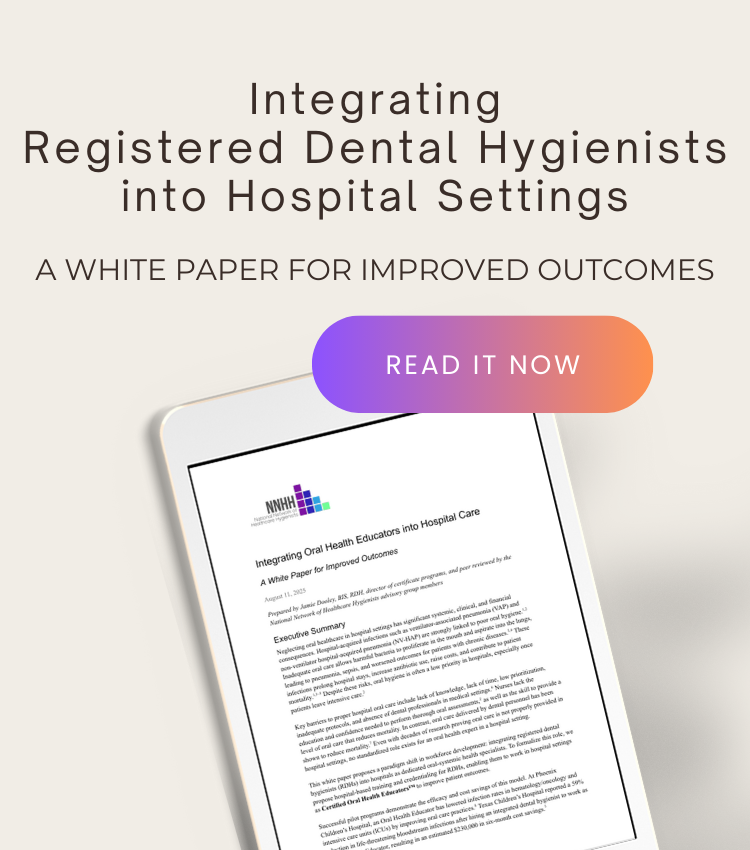
Dental hygienists work in an impressive array of settings under diverse job titles, and their career opportunities are expanding steadily [7]. As of 2025, 43 states now allow some form of direct access, permitting a hygienist to initiate treatment without the authorization of a dentist [8]. National Network of Healthcare Hygienists (NNHH) published a white paper in 2025 highlighting hospital oral care programs that were already highly successful in "Integrating Oral Health Educators into Hospital Care for Improved Outcomes." Dignity Health in Arizona is one of the pioneering programs mentioned in the white paper. The Clinical Program Research and Development Manager at Dignity Health, Michelle Gross-Panico, DHSc, RDH, PMP, reached out to NNHH to collaborate on an oral care training program for critical care patients, to expand the dental hygiene workforce into more hospital settings (available in late 2026/early 2027). Gross-Panico said,
"We must continue to dismantle the outdated barriers that prevent dental hygienists from practicing to the full extent of their education and training. Our program has proven dental hygienists (and even supervised hygiene students) can safely and effectively care for critical care patients, as well as implement oral care protocols for ventilated and nonventilated patients. I encourage all states to advocate for physician supervision like Arizona did. Our state is receiving better oral care as a result."
It is time for the medical world to recognize dental hygienists as a vital colleagues in the fight against chronic disease. It is time for hospital administrators to see the immense return on investment that an on-staff hygienist can provide. And it is time for dental hygienists to embrace their power, to educate their patients and medical colleagues, and to advocate for the changes needed in their state that will allow them to finally solve the crisis they were trained to prevent. The evidence is clear. The need is urgent. The solution is here.
This is the Year of the RDH.
References
[1] Centers for Disease Control and Prevention. (2026, January 16). Oral and Dental Health. National Center for Health Statistics. https://www.cdc.gov/nchs/fastats/dental.htm
[2] National Institute of Dental and Craniofacial Research. (2022, April). Oral Health in America: Section 3A Summary. https://www.nidcr.nih.gov/research/oralhealthinamerica/section-3a-summary
[3] CareQuest Institute for Oral Health. (n.d.). Out of Pocket: A Snapshot of Adults' Dental and Medical Care Coverage. https://carequest.org/out-of-pocket-a-snapshot-of-adults-dental-and-medical-care-coverage/
[4] Delta Dental. (n.d.). What Is a Dental Insurance Annual Maximum. https://www.deltadental.com/protect-my-smile/dental-insurance-101/what-is-dental-insurance-annual-maximum/
[5] Centers for Disease Control and Prevention. (2024, May 15). Health Disparities in Oral Health. https://www.cdc.gov/oral-health/health-equity/index.html
[6] American Dental Education Association. (n.d.). Dental Hygiene Curriculum. https://www.adea.org/godental/explore-dental-hygiene/dental-hygiene-programs/dental-hygiene-program-curriculums
[7] National Network of Healthcare Hygienists (2025, December 16) The Ultimate Guide to Dental Hygienist Career Change in 2026: Training, Credentials, and New Opportunities. https://www.healthcarehygienists.org/blog/the-ultimate-guide-to-dental-hygienist-career-change-in-2026-training-certifications-and-new-opportunities
[8] American Dental Hygienists' Association. (n.d.). Direct Access. https://www.adha.org/advocacy/scope-of-practice/direct-access/
About the Author

Jamie Dooley, BIS, RDH, CWDP, is the founder and certificate program director of the National Network of Healthcare Hygienists (NNHH), the first organization dedicated to positioning dental hygienists as essential members of interdisciplinary healthcare teams. A passionate advocate for workforce and talent development, she has dedicated her career to expanding professional opportunities for dental hygienists. Under her leadership, NNHH launched the world’s first ANSI-accredited certificate program in dental hygiene, followed by additional programs built to the same rigorous standards—establishing a new benchmark for professional training and career pathway opportunities for hygienists in hospitals, specialty clinics, community health and oncology.