Educational and Licensure Requirements of a Registered Dental Hygienist
Jan 17, 2026Registered Dental Hygienists (RDHs) are often misunderstood as narrowly trained dental auxiliaries who simply “clean teeth,” yet their foundational education and licensure requirements closely align with those of licensed medical professionals, such as registered nurses.
In reality, RDHs are highly educated preventive health specialists whose formal training prepares them to assess, identify, and manage oral conditions that directly affect your overall health, and you will find them working in both dental and medical settings.
Understanding the rigor of dental hygiene education and licensure is essential to appreciating the profession’s role in modern, integrated healthcare.
Accredited Education Pathway
To become a Registered Dental Hygienist, individuals must graduate from a dental hygiene program accredited by the Commission on Dental Accreditation (CODA). These programs are offered at the associate, bachelor’s, and master’s degree levels through colleges and universities across the United States.
Dental hygiene education typically requires nearly 3,000 hours of combined didactic and supervised clinical training, a benchmark comparable to many nursing programs. Admission is competitive and requires prerequisite coursework in the biological and physical sciences. While the field is still dominated by women, an increasing number of men are entering it just like we see in nursing.
Core Curriculum
Dental hygiene students complete a rigorous whole-body, healthcare-focused curriculum that mirrors foundational coursework taken by nursing and premedical students, including:
- Anatomy and physiology
- Histology and embryology
- Microbiology and immunology
- Pathology and pharmacology
- Medical emergencies and infection control
- Patient assessment and care planning
- Radiology and diagnostic imaging
- Ethics, communication, and behavioral science
- Public and community health
- HIPAA and protected health information (PHI)
- Cardiopulmonary resuscitation (CPR)
- Principles of research and evidence-based practice
This education equips RDHs to understand disease processes, evaluate medical histories, monitor vital signs, recognize oral manifestations of systemic illness, and respond appropriately to medical emergencies.
Extensive Clinical Training Prior to Licensure
In addition to classroom instruction, dental hygiene students complete hundreds of hours of direct patient care in supervised clinical settings. During these rotations, students are trained to:
- Perform comprehensive oral, head and neck examinations for signs of cancer
- Review both medical and dental histories for oral-systemic implications of family history, surgeries, conditions, and medications
- Conduct dental, periodontal and oral disease assessments for cavities, gum disease and more
- Take and record blood pressure, and sometimes A1C
- Take and interpret dental radiographs
- Perform dental prophylaxis (cleaning) above the gumline to prevent gum disease
- Place dental sealants and minimally invasive remineralizing treatments to treat early decay and prevent its spread
- Provide nonsurgical periodontal therapy (often referred to as a “deep cleaning”)
- Administer local anesthesia and nitrous oxide (numbing)
- Implement infection control and safety protocols
- Design oral health plans and protocols
- Recommend highly personalized oral health products and tools based on individualized patient needs
- Educate patients using evidence-based behavioral change strategies, including nutrition counseling
- Collaborate with other healthcare students (pre-med, pharm, optometry, nursing, etc) to introduce integrative approaches early
Clinical education emphasizes caring for diverse and medically complex populations, including patients with chronic disease, disabilities, and special healthcare needs — a foundation that supports expanded roles in hospitals and medical settings.
National Board and State Licensure Requirements
Graduation from a CODA-accredited program alone does not authorize practice. Dental hygienists must also meet strict licensure requirements, which include:
- National Board Examination
Candidates must pass the National Board Dental Hygiene Examination (NBDHE), which assesses competency in biomedical sciences, dental sciences, and clinical judgment. - Clinical Licensing Examination
Applicants must successfully complete a regional or state-approved clinical examination evaluating hands-on patient care skills. - State Licensure
Dental hygiene licensure is granted at the state level, and requirements vary by jurisdiction. All states require proof of education, board examination results, and clinical competency.
Once licensed, RDHs are legally recognized healthcare providers, accountable to state dental boards and bound by professional standards of care, just like any other healthcare provider.
Continuing Education and Professional Accountability
Dental hygiene licensure is not permanent. RDHs must complete ongoing continuing education (CE) to maintain licensure, ensuring they remain current with emerging science, evolving clinical guidelines, and evidence-based practices. CE requirements vary by state but often include mandatory training in CPR, human trafficking, infection control, ethics, and patient safety.
After graduating from a CODA accredited program, RDHs keep learning to expand their scope of practice with additional training in lasers, salivary testing, guided biofilm therapy, oral systemic education, speciality certificates, and more.
Most RDHs receive a bachelor’s degree in dental hygiene, and some go on to pursue a master's degree in dental hygiene or public health.
A growing number of RDHs have pursued doctoral degrees in health sciences, leadership and education. A doctoral degree in dental hygiene is supported by ALL professional dental hygiene organizations in the United States, but a program has not yet been established. As more hygienists receive doctoral degrees, the profession will have the educators needed to successfully raise the profession to a doctorate level one, similar to that of nursing.
Scope of Practice and Direct Access
While scopes of practice differ by state, many jurisdictions allow dental hygienists to practice under direct access models — meaning they can initiate care based on their own assessments without prior authorization from a dentist. A growing number of hospitals are developing oral care prevention programs utilizing the expertise of an RDH to reduce lengths of stay and deaths caused by hospital aquired pneumonia and mucosal barrier injury cental line-associated bloodsteam infections (MBI-CLABSIs, common in oncology patients) as nurses lack the time and training to properly perform oral care on vulernable populations.
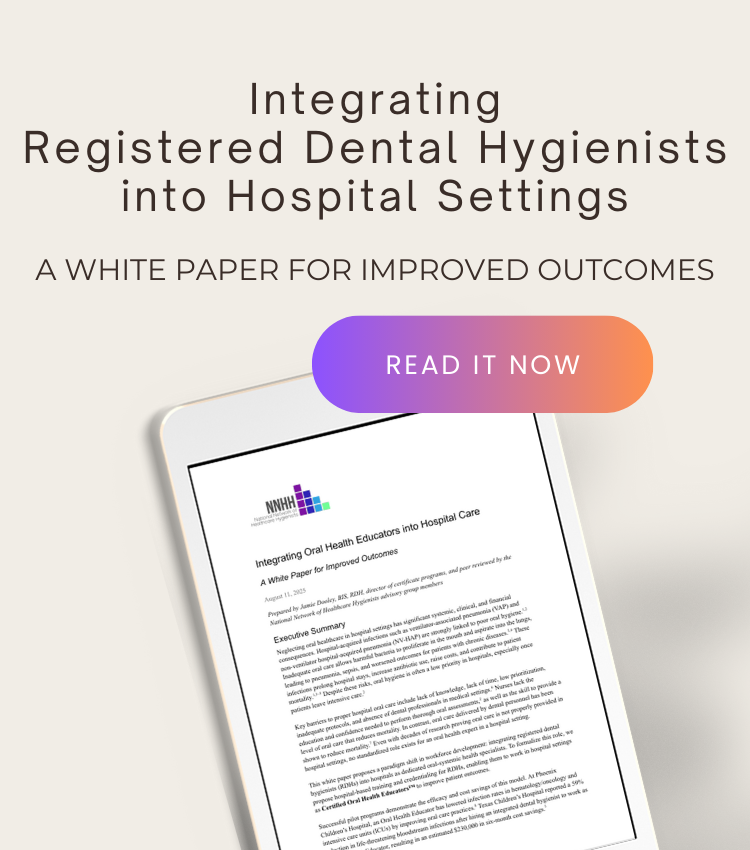
Read "Integrating Oral Health Educators into Hospital Care: A White Paper for Improved Outcomes"
A Licensed Healthcare Provider Who Improves Quality of Life & Saves Lives — Not an Auxiliary
The educational and licensure requirements of Registered Dental Hygienists clearly establish them as licensed healthcare professionals, not technical support staff. Their training emphasizes prevention, early detection, patient education, and risk reduction — competencies that are increasingly vital in value-based and whole-person healthcare models.
An RDH is not to be confused with a dental assistant, who assists the dentist during fillings, crowns and extractions or a hygienist during a routine visit. They are not degree holders and can be on the job trained. Many registered dental hygienists started as dental assistants then chose to go to hygiene school.
When paired with advanced training and post-licensure credentialing, such as oral-systemic education, RDHs are uniquely positioned to bridge long-standing gaps between dentistry and medicine. Their foundational education already supports this role; what has been missing historically is formal recognition and utilization within medical systems.
Conclusion
Today's Registered Dental Hygienist completes extensive, accredited education; rigorous clinical training; national and state examinations; and continuous professional development to earn and maintain licensure. Their preparation rivals that of many other allied health professionals and equips them to play a meaningful role in integrative medicine.
As healthcare systems increasingly include oral health to reduce chronic diseases and mortality, understanding the depth of RDH education and licensure is critical. These professionals are not being “expanded” beyond their competence — they are finally being utilized to the full extent of the education they already possess.
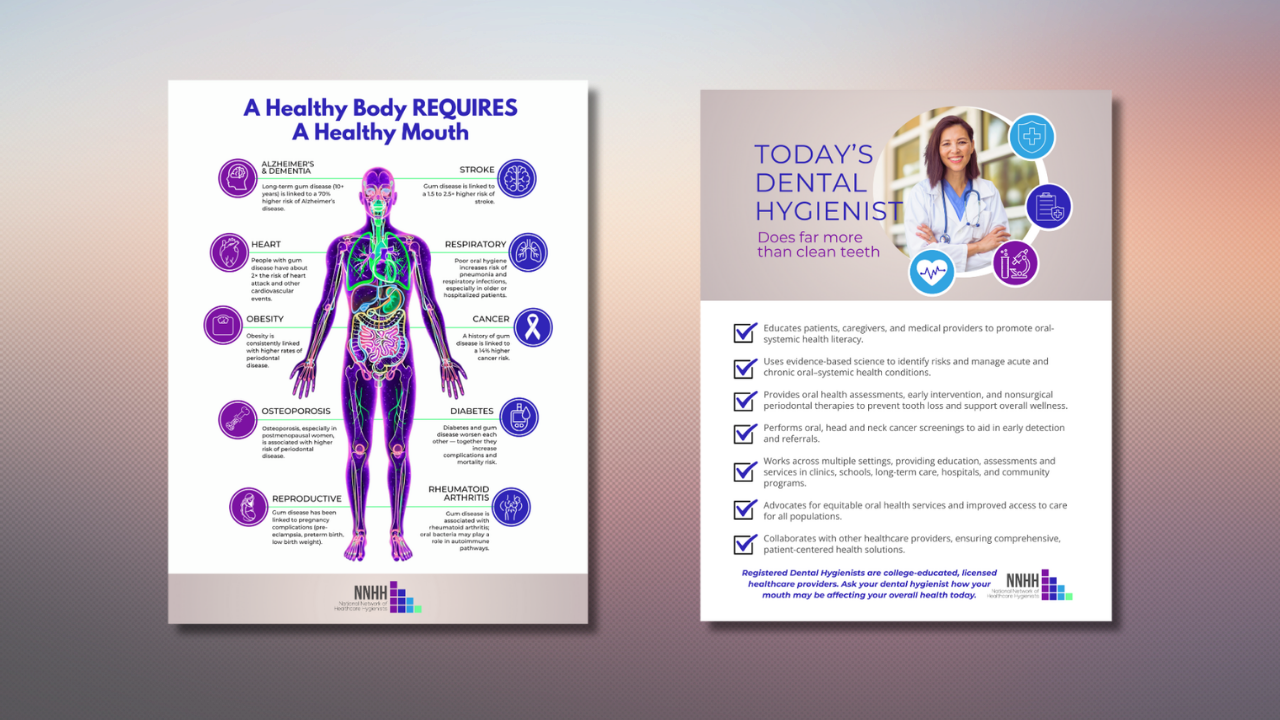
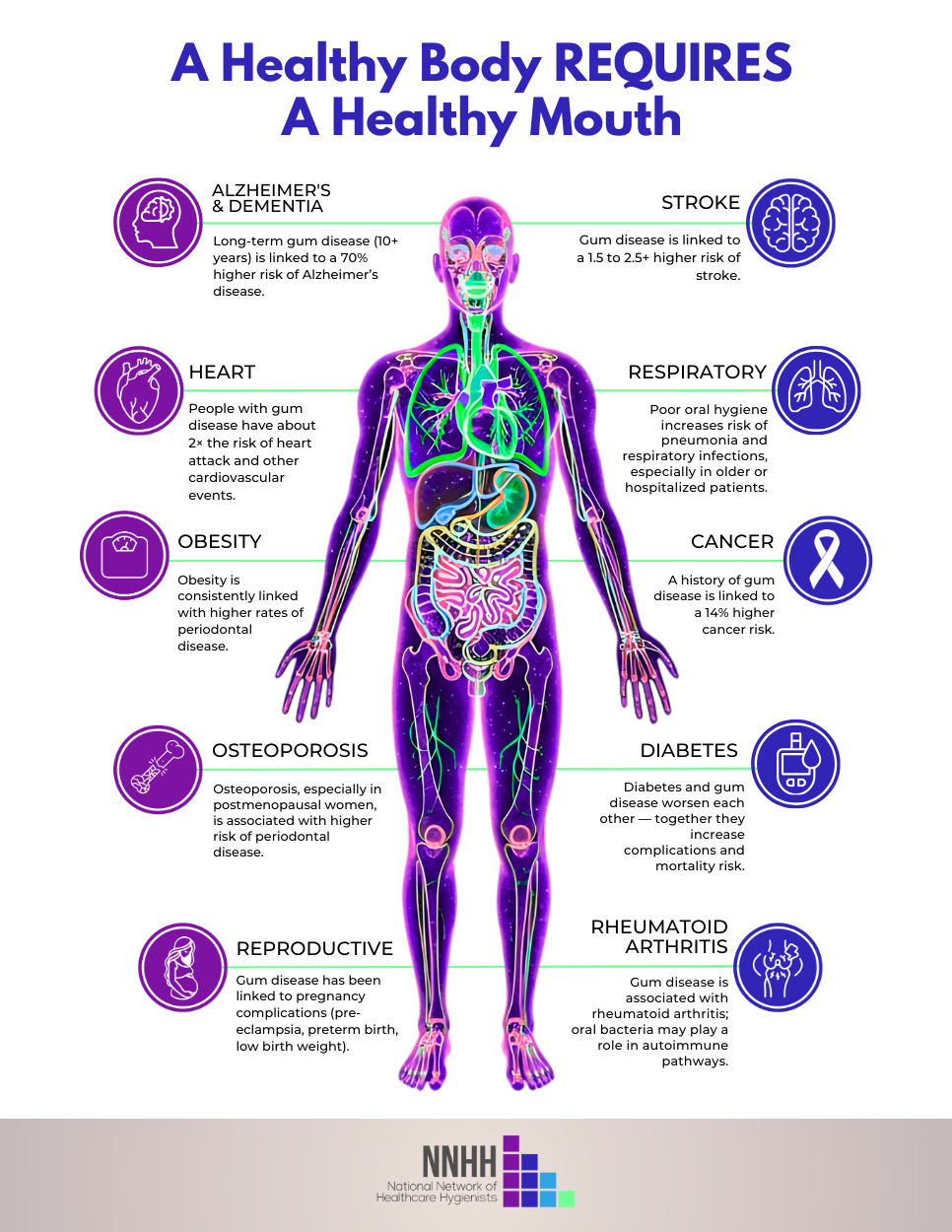
You cannot have a healthy body without a healthy mouth. The research confirmed it decades ago. Ask your registered dental hygienist about their education. Make sure they graduated from a CODA accredited program and ask them how your mouth may be affecting your body and vice versa.
Download a FREE RESOURCE that shows how oral health is connected to nearly all diseases and conditions and bring it to your next hygiene appointment to start a long overdue conversation. We promise you they will be grateful you did!