The Ultimate Guide to Dental Hygienist Career Change in 2026
Dec 16, 2025The career of a dental hygienist is widely respected, built on a foundation of patient care and preventive health. However, after years of clinical practice, many professionals find themselves contemplating a dental hygienist career change. Whether driven by physical strain, professional burnout, or a desire for new challenges and a better work-life balance, the search for alternative jobs for dental hygienists is more common than ever. The good news is that the skills and education acquired as a Registered Dental Hygienist (RDH) open doors to a vast landscape of rewarding non-clinical careers and advanced practice opportunities.
This comprehensive guide is designed for the dental hygienist standing at a career crossroads. We will explore the most promising alternative career paths, the critical role of dental hygiene continuing education, and how new dental hygienist certificate programs and degrees can fuel your professional transition. From public health to corporate roles and the exciting frontier of independent practice, your next chapter starts here.
Charting a New Course: Top Alternative Jobs for Dental Hygienists
The expertise of a dental hygienist is highly transferable to a multitude of roles. The easiest transition is often to that of a hygiene team leader, treatment coordinator, or another administrative role within a private practice or DSO. Those roles help you decide if you like being nonclinical, show you where you have skill gaps to close, and they give you new titles for your resume when applying for expanded roles beyond dental settings.
The hygienist of the future has a unique stack of degrees, certificates, digital badges and microcredentials that propels them upward in their chosen field as a subject matter expert, opening new doors to more administrative opportunities, much like nurses have available to them now. The hygienist of the future does not think of a 2 year associate degree as the end of their education, but instead the very beginning. Online degrees, and self-paced certificate programs continue to make it easier for adult learners to broaden their careers every few years as technology advances. They hygienist of the future is very tech-saavy!
Roles actual dental hygienists have held or transitioned into:
Public Health / Healthcare
- Example Roles: Hospital-Based Hygienist, Infection Preventionist, Oral Health Educator, Oral Health (or Dental) Director, Community Dental Health Program Coordinator or Director, Nonprofit Director, Program Manager, School-based or Mobile Educator/Clinician, State-based roles (workforce development, fluoride or sealant programs, etc)
- Description: Develop, implement and/or manage oral health programs and/or services for your state, hospitals, nursing homes, schools, community centers, universities, or government agencies. Focus on innovation of healthcare delivery, workforce shortage areas and development, prevention, safety, quality, and expanded care for underserved populations.
- Key Skills Leveraged: Patient education, provider education, program development, speaking & presenting, interprofessional collaboration, computer skills, project management, leadership, community outreach, grant writing & management.
Corporate
- Example Roles: Corporate Oral Health Specialist, Tech/Product Trainer, Sales Representative (oral health or general medical)
- Description: Work for dental product manufacturers, insurance companies, or pharmaceutical firms. Roles can involve product testing, training other professionals, or sales and marketing.
- Key Skills Leveraged: Clinical expertise, biomedical sciences, product knowledge, communication, technology proficiency.
Education
- Example Roles: Dental Hygiene Educator, Online Course Instructor, Continuing Education Provider, Speaker, Presenter
- Description: Teach and train the next generation of dental hygienists in academic settings or develop and deliver certificate program lectures and CE courses for current professionals.
- Key Skills Leveraged: Clinical mastery, mentorship, workforce development, talent development, curriculum development, slide design, speaking & presenting, video editing.
Subject Matter Expert
- Example Roles: Writer, Speaker, Educator, Instructor, Manager, Clinical Expert, Trainer, Administrator, Process Designer, Oral Health Coach, Teledentistry or Telehealth Consultant
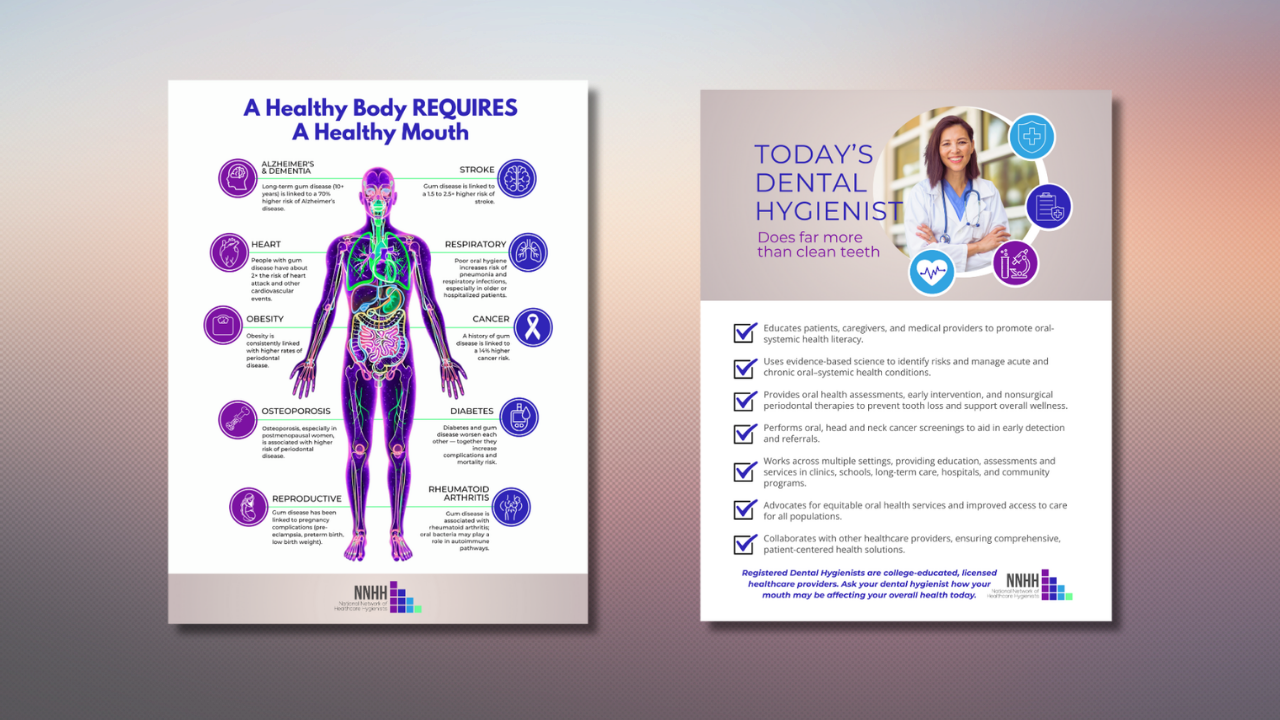
- Description: Share your subject matter expertise with the general public, dental and medical providers, corporations, product designers and administrators for program development in areas such as airway health, sleep medicine, oncology, diabetes, cardiology, endocrinology, mental health, maternal/fetal, women's health, pediatrics, geriatrics, dementia, special needs populations, salivary testing, lasers, implants and more.
- Key Skills Leveraged: Writing, speaking, presenting, program development, curriculum development, instructional design, slide creation, video editing, research, communications, AI prompting.
Entrepreneurship
-
Example Roles: Orofacial Myologist (Myofunctional Therapist), Independent Contractor, Practice Owner (RDHAP), Consultant, Speaker, Oral Health Coach
-
Description: Start your own business, such as a myofunctional or mobile dental hygiene service, a consulting firm for dental practices, or an educational blog or platform.
-
Key Skills Leveraged: Clinical skills, accounting, self-motivation, technology proficiency, AI prompting.
Work from Home (Remote)
- Example Roles: Remote Patient Educator, Teledentistry Consultant, Virtual Myofunctional Therapist, Podcast Host, Social Media Influencer, Ambassador/Affiliate, Writer, Designer, Program Developer, Project Manager, Oral Health Coach, Insurance Biller
- Description: Provide virtual consultations, patient education, and support through digital platforms, offering flexibility and a new mode of patient interaction.
- Key Skills Leveraged: Online/virtual communication, technology proficiency, AI prompting, patient education, graphic design, video editing, blog writing, website design, learning management system (LMS), client retention management (CRM)
Fueling Your Transition: The Power of Continuing Your Education
Transitioning to a new role, whether non-clinical or an advanced practitioner model, almost always involves further education. This is where dental hygiene continuing education becomes a powerful tool for career advancement. Beyond simply fulfilling state requirements for CE credits, targeted training can equip you with the specialized knowledge, and credentials needed for a new career path.
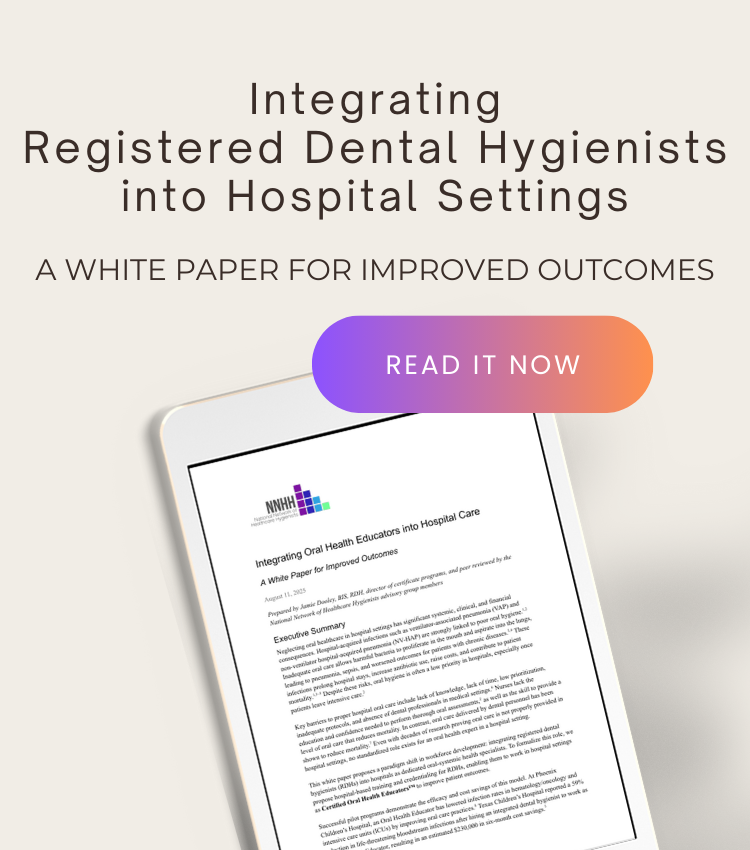
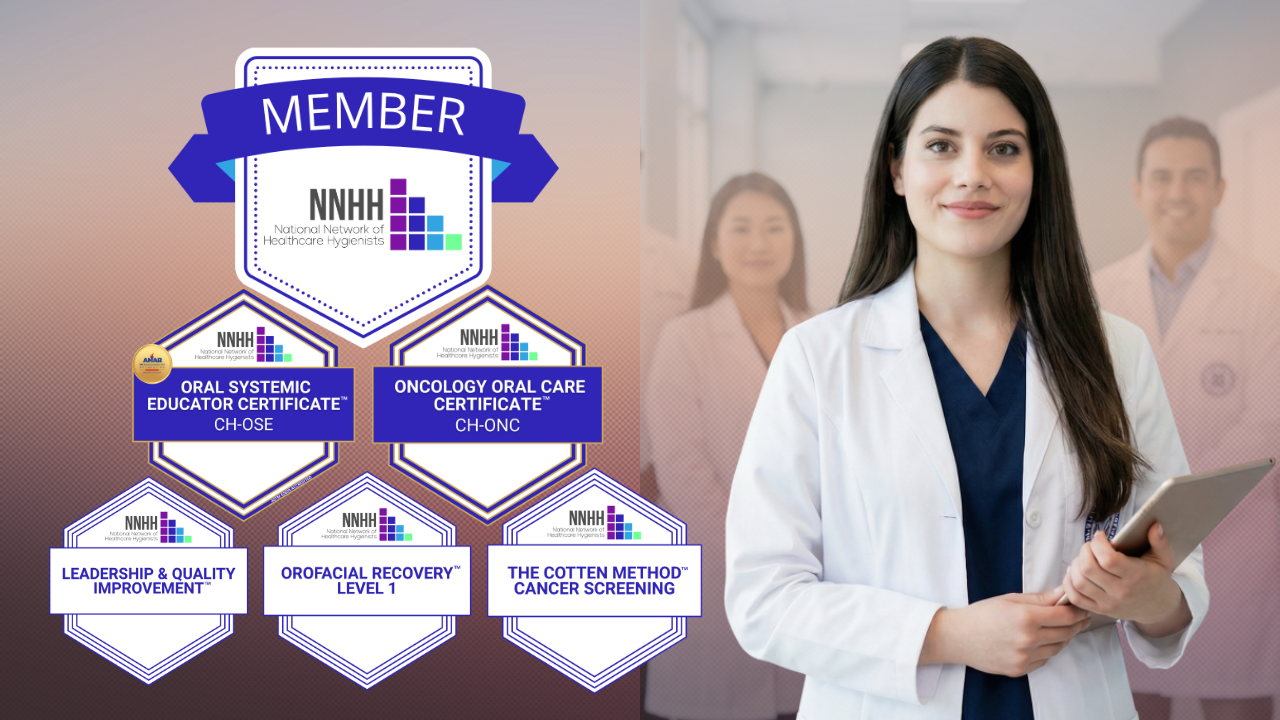
For many, a full degree program is not feasible due to time and financial constraints. Dental hygienist certificate programs offer a focused, cost-effective, and often faster alternative to gain expertise in a specific niche. These programs are designed for working professionals and are frequently offered online. A certificate programs differs from a certification in that a certification may require training and education, but it does not provide education.
Specialty Certificate Programs
- Description: Focused, non-degree programs that provide in-depth training in a specific area (e.g., oncology, public health, oral-systemic health). Often provide credentials and AGD PACE credits.
- Best For: Hygienists seeking to specialize, enhance clinical skills, or transition to a specific non-clinical role without pursuing a new degree.
Degree Completion Programs (RDH to BSDH)
-
Description: Programs designed for licensed hygienists with an associate's degree to complete a Bachelor of Science in Dental Hygiene. Often available online.
-
Best For: Hygienists aiming for leadership, education, or public health roles that require a bachelor's degree for advancement.
Master's Degree Programs (MSDH)
- Description: Graduate-level programs focused on research, public health policy, or education leadership.
- Best For: Hygienists aspiring to high-level academic, administrative, or research positions.
Your Roadmap to a Successful Career Transition
- Self-Assessment: Identify your passions, skills, and desired work environment. Do you enjoy teaching, business, or policy work? What kind of impact do you want to have?
- Research and Explore: Investigate the alternative jobs for dental hygienists that align with your interests. Look at job descriptions, salary expectations, and required qualifications on sites like Indeed. Search terms such as "oral health," community health," or "program coordinator" and "remote" to view nontraditional roles.
- Invest in Education: Choose a dental hygienist certificate program or degree path that provides the necessary credentials for your target role. Start with a single CE course to explore a new area.
- Network Strategically: Connect with professionals who are already in the roles you aspire to. Join professional associations and attend virtual or in-person conferences. Search for blog articles about hygienists in alternative roles and reach out to them.
- Update Your Resume: Tailor your resume and cover letter to highlight your transferable skills and new certifications, positioning yourself as the ideal candidate for your new career. Use Canva or AI to assist you to highlight your skills beyond clinical care.
The field of dental hygiene is evolving. By embracing lifelong learning and strategically pursuing new training and stacking credentials, you can successfully navigate a dental hygienist career change and build a fulfilling, long-lasting career that grows with you.
To learn more National Network of Healthcare Hygienists and explore our certificate programs and professional membership, click HERE